


📖 Joshua 6:25 (NKJV)
"And Joshua spared Rahab the harlot, her father's household, and all that she had. So she dwells in Israel to this day..."
My Dear Children,
When the Israelites finally captured Jericho, Rahab and everyone inside her house were spared, exactly as the spies had promised.
But there is something beautiful in the words "So she dwells in Israel to this day."
Rahab was no longer simply the woman who lived in Jericho. She had been brought into the community of God's people.
Her past was real. The Bible does not pretend otherwise. But her past was not the end of her story.
Rahab's story becomes even more remarkable when we look beyond Joshua. Matthew 1:5 tells us that Rahab became the mother of Boaz. Boaz became the father of Obed, Obed became the father of Jesse, and Jesse became the father of King David. Rahab therefore became part of the family line through which Jesus Christ came.
What a transformation.
1 Corinthians 6:11 says, "And such were some of you. But you were washed, but you were sanctified, but you were justified in the name of the Lord Jesus."
Isaiah 43:18–19 also reminds us, "Do not remember the former things, nor consider the things of old. Behold, I will do a new thing."
God's grace does not deny our past. It gives us the opportunity to live differently because of what He is doing in our lives.
Relevance to Life and Family
Sometimes people carry labels for years. Someone may say, "That is just how you are," because of something you did in the past.
But if God can transform Rahab's story, He can transform ours too.
We should also be careful not to keep reminding people of mistakes they have genuinely repented of. If God is giving someone a new beginning, we should not continually drag them back into their old life.
Family Reflection
- What changed in Rahab's life after Jericho?
- Why is it wrong to define someone only by their past?
- How can our family encourage people who are trying to make a new beginning with God?
Prayer
Heavenly Father, thank You for Your transforming grace. Help us not to be prisoners of our past mistakes or to hold the past mistakes of others against them. Give us the courage to become the people You are calling us to be. May our family always make room for repentance, restoration, and new beginnings. In Jesus' name, Amen.

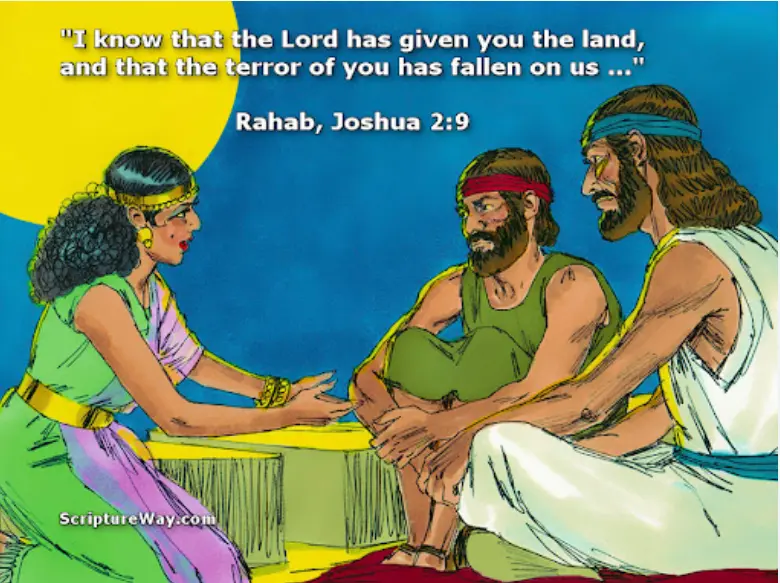
📖 Joshua 2:13 (NKJV)
"And spare my father, my mother, my brothers, my sisters, and all that they have, and deliver our lives from death."
My Dear Children,
When Rahab realized that God was giving Israel the victory over Jericho, she did not think only about herself. She immediately thought about the people she loved.
She asked the spies to spare her father, mother, brothers, sisters, and everyone who belonged to them.
This reveals something beautiful about Rahab's faith. Her relationship with God changed the way she thought about her family. She wanted them to experience the same deliverance she had come to believe in.
Rahab could have kept the information to herself. Instead, she asked for a promise that her whole household would be protected.
Acts 16:31 says, "Believe on the Lord Jesus Christ, and you will be saved, you and your household." This does not mean that one person's faith automatically saves everyone else. Each person must respond to God personally. But it shows us the powerful influence one believer can have within a family.
Deuteronomy 6:6–7 teaches parents to keep God's words in their hearts and teach them diligently to their children. Faith is meant to be shared from one generation to another.
Rahab's concern for her family reminds us that when we discover something precious about God, we should want the people we love to know Him too.
Relevance to Life and Family
Our faith should not be something we keep inside ourselves. The way we speak, behave, forgive, serve, and treat others can influence the spiritual direction of our families.
Parents can introduce their children to God's Word. Children can encourage their parents and siblings to pray and trust God. Every member of a family can become an influence for good.
We cannot make the decision to follow God for someone else, but we can lead them toward Him through our example.
Family Reflection
- Why did Rahab immediately think about her family?
- How can one person's faith influence an entire household?
- What can we do to help our family members grow closer to God?
Prayer
Heavenly Father, thank You for the gift of family. Help us become people whose faith brings others closer to You. Give parents wisdom to teach their children, and give children courage to be good examples. May our entire family come to know, love, and follow You. In Jesus' name, Amen.
📖 Joshua 2:4 (NKJV)
"Then the woman took the two men and hid them..."
My Dear Children,
Rahab had heard about the God of Israel, and she believed what she had heard. But then her faith was tested.
Two Israelite spies had entered Jericho, and the king discovered that they were in Rahab's house. He ordered her to bring them out.
Rahab had a choice. She could hand the spies over and protect herself, or she could protect them and put herself at risk.
She chose to protect them.
Rahab hid the spies under stalks of flax on the roof and then sent the king's men in another direction. Her faith had moved beyond what she believed in her heart; it now influenced what she was willing to do.
Hebrews 11:31 says, "By faith the harlot Rahab did not perish with those who did not believe, when she had received the spies with peace."
James 2:25 gives us another perspective: "Likewise, was not Rahab the harlot also justified by works when she received the messengers and sent them out another way?"
Rahab's story shows us that genuine faith can require courage. It is easy to say we believe in God when everything is comfortable. The real test comes when doing what is right becomes difficult.
Relevance to Life and Family
There will be moments when children must choose between doing what is right and following their friends. Adults face similar choices at work, in business, and in relationships.
Sometimes doing the right thing may cost us popularity, comfort, or approval.
Rahab teaches us that faithfulness to God is more important than pleasing people. Courage does not mean that we have no fear. It means we choose what is right even when we are afraid.
Family Reflection
- What risk did Rahab take to protect the spies?
- Why does genuine faith sometimes require courage?
- When might our family need courage to do what is right?
Prayer
Heavenly Father, give our family courage to stand for what is right. When we are pressured to follow the crowd, help us remember that You are greater than our fears. Give us the faith to obey You even when obedience is difficult. In Jesus' name, Amen.
📖 Joshua 2:11 (NKJV)
"And as soon as we heard these things, our hearts melted; neither did there remain any more courage in anyone because of you, for the Lord your God, He is God in heaven above and on earth beneath."
My Dear Children,
Rahab lived in Jericho, far away from Israel. She had never personally witnessed the Red Sea opening or seen the miracles God had performed for His people. Yet she had heard about what God had done.
She heard how the Lord had brought Israel out of Egypt, how He had dried up the Red Sea, and how He had given His people victory over their enemies.
But Rahab did something with what she heard. She didn't simply say, "That is an interesting story." She came to a conclusion:
"The Lord your God, He is God in heaven above and on earth beneath."
Her faith began with hearing, but it did not stop there.
Romans 10:17 says, "So then faith comes by hearing, and hearing by the word of God." What we repeatedly hear about God can shape what we believe about Him.
This is why what we allow into our hearts and minds matters. God's Word teaches us who He is, what He has done, and what He promises to do.
Hebrews 11:6 tells us, "Without faith it is impossible to please Him, for he who comes to God must believe that He is, and that He is a rewarder of those who diligently seek Him."
Rahab heard about God, believed what she heard, and then began seeking Him.
Relevance to Life and Family
Children learn about God through what they hear at home, at church, in Bible studies, and through the example of those around them.
Parents therefore have an important responsibility. The words we speak about God can help shape the faith of the next generation.
But Rahab also reminds us that hearing is only the beginning. We must personally decide what we will do with the truth we have received.
Family Reflection
- What had Rahab heard about God?
- How did what she heard change her belief?
- What are we allowing ourselves and our children to hear about God each day?
Prayer
Heavenly Father, thank You for giving us Your Word so that we can know You. Help our family listen carefully to Your truth and allow it to build genuine faith in our hearts. May what we hear about You lead us to trust You, obey You, and seek You more deeply. In Jesus' name, Amen.
Introduction: This week we are going to learn from a woman in the bible called Rahab. Rahab is especially interesting because the Bible gives us several facts about her that are easy to overlook.
Rahab lived in Jericho, one of the cities standing in the way of Israel's entrance into the Promised Land. Joshua 2 introduces her as a woman who housed two Israelite spies.
But there is much more to her the story.
1. Rahab had a difficult past.
Joshua 2:1 identifies Rahab as a prostitute. The Bible does not hide this part of her story.Yet Rahab's story does not end with her past.
She eventually married Salmon and became the mother of Boaz (Matthew 1:5). Boaz later became the father of Obed, the father of Jesse, the father of David.
b
That means Rahab became part of the family line of King David and ultimately of Jesus Christ.
2. Rahab believed before she saw
Rahab had never seen Israel's God perform the Red Sea miracle herself. She had heard about it.
She said:
“For we have heard how the Lord dried up the water of the Red Sea for you...”
Joshua 2:10
Then she made an extraordinary confession:
“For the Lord your God, He is God in heaven above and on earth beneath.”
Joshua 2:11
Her faith began with hearing what God had done.
Romans 10:17 says:
“Faith comes by hearing, and hearing by the word of God.”
3. Rahab's faith produced action
Rahab did not simply say, "I believe in Israel's God."
She acted.
She hid the spies, protected them from the king of Jericho, helped them escape, and followed their instructions concerning the scarlet cord.
This is why Hebrews 11:31 says:
“By faith the harlot Rahab did not perish with those who did not believe.”
James 2:25 makes the connection even clearer: Rahab demonstrated her faith through what she did.
So Rahab teaches us something important:
Real faith does not remain only in our words. It changes our decisions.
4. Rahab had to choose a side
This is one of the most powerful parts of her story.
Rahab lived in Jericho. Her city was about to face God's judgment. She could have remained silent and simply protected herself.
Instead, she chose to identify herself with the God of Israel.
That decision came with risk.
If the king discovered that she was hiding the spies, she could have been punished.
Her faith therefore involved courage.
5. Rahab asked for salvation for her family
This is another detail I think deserves special attention.
Rahab did not only say, "Save me."
She asked the spies to spare her father, mother, brothers, sisters, and everyone who belonged to them.
Joshua 2:13 says:
“And spare my father, my mother, my brothers, my sisters, and all that they have, and deliver our lives from death.”
Rahab's faith affected her family.
That gives us a beautiful family lesson: when one person turns toward God, their influence can extend to an entire household.
6. The scarlet cord became a sign of deliverance
The spies instructed Rahab to tie a scarlet cord in the window.
When Israel attacked Jericho, everyone inside that house was spared.
The Bible does not explicitly say that the scarlet cord itself had magical or saving power. The important thing was Rahab's obedience to the instruction given to her.
The cord became the visible sign identifying the house that was to be spared.
And this naturally points us toward a larger biblical theme of deliverance through God's appointed means.
7. Rahab's story did not end at Jericho
This is perhaps the most beautiful part.
After Jericho fell, Rahab and her family were spared.
Joshua 6:25 says:
“And Joshua spared Rahab the harlot, her father's household, and all that she had.”
But God did not merely rescue her from destruction.
He gave her a new place among His people.
Joshua 6:25 continues by saying that she dwelt among Israel.
She went from being an outsider in Jericho to becoming part of God's people.
And generations later, she appears in the genealogy of Jesus.
That makes Rahab's story much bigger than "a woman who helped two spies."
keep following the devotions every to learn and draw close to God, dont forget too share in the comment section your lessons or thoughts. God bless you. Praise God.
LETS PRAY
Dear God in heaven king of Glory, Holy Holy Holy, you have been so good to us, our hearts are full of gratitude for the things you have done for us. Please continue to talk to us throuh your word Father. I pray you meet each and everyone at their points of need, heal the broken hearts, the sick, provide dear God. I have prayed all this through Jsesus Christ our Lord and saviour Amen.
📖 2 Chronicles 31:20–21 (NKJV)
"Thus Hezekiah did throughout all Judah, and he did what was good and right and true before the Lord his God. And in every work that he began... he did it with all his heart and prospered."
My Dear Children,
Hezekiah's story is not only about the great battles he faced. After restoring worship, he also organized the priests, encouraged the people to give, and made sure that the work of God's house was properly supported.
The Bible says that Hezekiah did these things "with all his heart." He was not simply performing religious activities. He genuinely wanted God's people to honor the Lord.
But there is an important lesson here. God blessed Hezekiah with wealth, influence, military success, and a strong kingdom. Later, those blessings became part of his test when he proudly displayed his possessions to the Babylonian visitors.
The problem was never the possessions themselves. The danger was allowing what God had given him to become a source of pride.
Deuteronomy 8:18 reminds us:
“And you shall remember the Lord your God, for it is He who gives you power to get wealth.”
Everything we have ultimately comes from God. Our abilities, opportunities, education, businesses, possessions, and achievements are gifts that should point us back to Him.
Jesus said in Matthew 6:21:
“For where your treasure is, there your heart will be also.”
What we treasure reveals what has captured our hearts.
Relevance to Life and Family
God may bless a family with money, education, property, talents, success, or opportunities. None of these things are wrong. The danger comes when the blessing becomes more important than the One who gave it.
A family should be able to say, “We are grateful for what God has given us, but God Himself is our greatest treasure.”
Family Reflection
- What blessings has God given our family?
- How can blessings sometimes become a source of pride?
- How can we use what God has given us to honor Him?
Prayer
Heavenly Father, thank You for every blessing You have placed in our lives. Help us never to love Your gifts more than we love You. Keep our hearts humble and grateful, and teach us to use everything You have given us for Your glory and the blessing of others. In Jesus' name, Amen.
📖 2 Chronicles 29:10 (NKJV)
"Now it is in my heart to make a covenant with the Lord God of Israel, that His fierce wrath may turn away from us."
My Dear Children,
Hezekiah became king at a time when Judah had wandered far from God. The temple had been neglected, worship had been corrupted, and the people had turned toward idols.
But Hezekiah did not simply complain about what the previous generation had done. He decided to do something about it.
He called the priests and Levites, cleansed the temple, restored worship, and called the people back to the Lord. He understood that the past could not be changed, but the present could be surrendered to God.
This is an important lesson from Hezekiah's life: a bad beginning does not have to produce a bad ending.
Joel 2:12–13 gives God's invitation:
“Now, therefore,” says the Lord, “Turn to Me with all your heart... So rend your heart, and not your garments; Return to the Lord your God, For He is gracious and merciful.”
God was not asking Judah to pretend that nothing had happened. He was calling them to genuinely return to Him.
Isaiah 55:7 gives another beautiful promise:
“Let the wicked forsake his way, And the unrighteous man his thoughts; Let him return to the Lord, And He will have mercy on him; And to our God, For He will abundantly pardon.”
Hezekiah's story shows us that when people turn back to God sincerely, they do not have to remain prisoners of yesterday.
Relevance to Life and Family
Perhaps someone in the family has made mistakes. Perhaps a child has developed a bad habit, a parent regrets something from the past, or the family has neglected certain spiritual responsibilities.
The answer is not to remain trapped in guilt. The answer is to turn back to God and begin again.
Every new day is an opportunity to make a better choice, restore what has been neglected, and walk closer with God.
Family Reflection
- What did Hezekiah do when he saw the spiritual condition of Judah?
- Why is it important not to remain trapped by past mistakes?
- Is there something our family needs to begin doing differently today?
Prayer
Heavenly Father, thank You that You give us opportunities to return to You. Help us not to remain trapped by yesterday's mistakes. Give our family courage to make things right, seek Your forgiveness, and begin again with You. May our new choices honor You and bless those around us. In Jesus' name, Amen.

📖 2 Chronicles 32:32–33 (NKJV)
"Now the rest of the acts of Hezekiah and his goodness, indeed they are written in the vision of Isaiah the prophet... So Hezekiah rested with his fathers... And all Judah and the inhabitants of Jerusalem honored him at his death."
My Dear Children,
Every person's life tells a story. Some people begin well but do not finish well. Others face many difficulties yet remain faithful to God until the end.
When the Bible summarizes Hezekiah's life, it remembers his goodness and the honor the people gave him when he died. Although Hezekiah made mistakes, especially when he became proud after God had greatly blessed him, he humbled himself before the Lord.
Many people overlook 2 Chronicles 32:26, which says, "Then Hezekiah humbled himself for the pride of his heart, he and the inhabitants of Jerusalem, so that the wrath of the Lord did not come upon them in the days of Hezekiah." This verse shows that when Hezekiah realized his sin, he repented. God is always ready to forgive those who humble themselves before Him.
The Bible does not teach that God's people are perfect. It teaches that they are willing to repent when they fail.
The apostle Paul expressed this same desire near the end of his life when he wrote, "I have fought the good fight, I have finished the race, I have kept the faith." (2 Timothy 4:7)
Jesus also teaches us in Matthew 24:13, "He who endures to the end shall be saved." God calls us not only to start following Him but to remain faithful throughout our lives.
Relevance to Life and Family
Every family will make mistakes. Parents will sometimes fail. Children will sometimes make poor choices. What matters is that we quickly turn back to God, learn from our mistakes, and continue walking with Him.
A successful life is not one without failures—it is one that continues to trust, obey, and return to God.
May our families be remembered not for wealth, achievements, or popularity, but for loving the Lord and remaining faithful to Him.
Family Reflection
- What helped Hezekiah finish his life with honor despite his mistakes?
- Why is repentance an important part of the Christian life?
- If people remembered our family years from now, what would we want them to say?
Prayer
Heavenly Father, thank You for the lessons we have learned from the life of King Hezekiah. Help our family remain humble, quick to repent, and faithful to You every day. Strengthen us to finish our race well, always trusting in Your grace and walking in obedience to Your Word. May our lives bring glory to You from beginning to end. In Jesus' name, Amen.
** 📖 2 Chronicles 32:25 (NKJV)**
"But Hezekiah did not repay according to the favor shown him, for his heart was lifted up; therefore wrath was looming over him and over Judah and Jerusalem."
My Dear Children,
King Hezekiah had seen God do amazing things. God had delivered Jerusalem from the Assyrian army, healed him from a deadly illness, and even caused the shadow on the sundial to move backward as a sign that He would keep His promise (2 Kings 20:8–11).
Soon after these miracles, visitors arrived from Babylon. They came because they had heard about Hezekiah's recovery and the miraculous sign.
What many people overlook is that God allowed this moment to reveal what was in Hezekiah's heart. Instead of giving glory to God, Hezekiah proudly showed the Babylonian officials all his treasures—his silver, gold, spices, precious oil, armor, and everything in his storehouses (2 Kings 20:12–13).
The Bible explains why this happened: "God withdrew from him, in order to test him, that He might know all that was in his heart." (2 Chronicles 32:31)
God already knew Hezekiah's heart, but the test revealed it to Hezekiah himself and to the nation. Success can sometimes become a greater test than hardship. Difficulties often drive us to God, while success can tempt us to depend on ourselves.
Proverbs 16:18 warns us, "Pride goes before destruction, and a haughty spirit before a fall."
James 4:6 reminds us, "God resists the proud, but gives grace to the humble." God delights in hearts that remember Him even after seasons of blessing.
Relevance to Life and Family
When God blesses us with good grades, a new job, success in business, good health, or answered prayers, it is easy to begin thinking that we accomplished these things on our own.
Hezekiah reminds us to remain humble. Every blessing we receive is an opportunity to glorify God, not ourselves.
Family Reflection
- Why did God allow Hezekiah to be tested?
- Why can success sometimes be more dangerous than hardship?
- How can our family remain humble when God blesses us?
Prayer
Heavenly Father, thank You for every blessing You have given our family. Protect our hearts from pride and teach us to give You all the glory. Help us remain humble in times of success and faithful in every season of life. May everything we have and everything we achieve point others to You. In Jesus' name, Amen.
📖 2 Kings 20:1–3 (NKJV)
"In those days Hezekiah was sick and near death. And Isaiah the prophet, the son of Amoz, went to him and said, 'Thus says the Lord: "Set your house in order, for you shall die, and not live."' Then he turned his face toward the wall, and prayed to the Lord..."
My Dear Children,
After God delivered Jerusalem from the mighty Assyrian army, another challenge came into Hezekiah's life. This time, it was not an enemy outside the city—it was an illness in his own body.
The prophet Isaiah brought a difficult message from God: "Set your house in order, for you shall die, and not live." Instead of becoming angry or giving up, Hezekiah immediately turned to God in prayer.
What many people overlook is that Hezekiah did not rely on yesterday's miracle. Although God had already answered his prayers before, Hezekiah knew he still needed God today. Every new challenge requires fresh dependence on the Lord.
The Bible tells us that before Isaiah had even left the middle court, God told him to return to Hezekiah with good news. God had heard his prayer, seen his tears, and promised to add fifteen more years to his life (2 Kings 20:4–6).
James 5:16 reminds us, "The effective, fervent prayer of a righteous man avails much." God hears the sincere prayers of His people.
Psalm 50:15 also says, "Call upon Me in the day of trouble; I will deliver you, and you shall glorify Me." God invites us to come to Him, not only in national crises but also in our personal struggles.
Relevance to Life and Family
Life brings different kinds of challenges. Some are public, while others are deeply personal. We may face sickness, grief, disappointment, or uncertainty.
Hezekiah teaches us that our first response should always be to seek God. Yesterday's blessings are wonderful, but they should encourage us to trust Him again today.
Family Reflection
- Why did Hezekiah pray as soon as he received the difficult news?
- What does this story teach us about God's care for His children?
- How can our family make prayer our first response instead of our last resort?
Prayer
Heavenly Father, thank You for hearing our prayers and caring about every part of our lives. Help our family depend on You every day, not just during emergencies. Teach us to bring every joy, sorrow, and need before You, trusting that You always hear us. In Jesus' name, Amen.