


📖 2 Kings 19:35 (NKJV)
"And it came to pass on a certain night that the Angel of the Lord went out, and killed in the camp of the Assyrians one hundred and eighty-five thousand; and when people arose early in the morning, there were the corpses—all dead."
My Dear Children,
After Hezekiah prayed and the prophet Isaiah delivered God's message, nothing seemed to happen immediately. The Assyrian army was still camped around Jerusalem, and the city was still under threat.
But during the night, God acted.
The Bible tells us that the Angel of the Lord went into the Assyrian camp, and by morning 185,000 soldiers were dead. Jerusalem did not win because its army was stronger. The victory belonged entirely to the Lord.
What many people overlook is that the people of Jerusalem never fought this battle. God had already promised through Isaiah that the king of Assyria would not enter the city, shoot an arrow there, or build a siege mound against it (2 Kings 19:32–34). Every word God spoke came true.
This reminds us of what Moses told the Israelites at the Red Sea: "The Lord will fight for you, and you shall hold your peace." (Exodus 14:14)
King Jehoshaphat would later receive a similar promise: "Do not be afraid nor dismayed because of this great multitude, for the battle is not yours, but God's." (2 Chronicles 20:15)
God's victory over Assyria also fulfilled Isaiah's prophecy and showed that no king, army, or nation is greater than the Lord.
Relevance to Life and Family
There are times when families face problems that seem too big to overcome. We may not know what to do, but God does.
This does not mean we do nothing. Hezekiah prepared the city, encouraged the people, and most importantly, prayed. After doing what God required of him, he trusted God to do what only God could do.
When we faithfully obey the Lord and place our confidence in Him, we can rest knowing that He is able to accomplish what we never could.
Family Reflection
- Why did Jerusalem win without fighting the Assyrian army?
- What promise of God was fulfilled that night?
- What battle does our family need to place in God's hands?
Prayer
Heavenly Father, thank You for reminding us that nothing is impossible for You. Help our family to trust You when we face challenges beyond our strength. Teach us to obey You, pray faithfully, and rest in Your power. We know that You are able to do what no one else can. In Jesus' name, Amen.
📖 2 Kings 19:14 (NKJV)
"And Hezekiah received the letter from the hand of the messengers, and read it; and Hezekiah went up to the house of the Lord, and spread it before the Lord."
My Dear Children,
The king of Assyria did not stop with threats. He sent a letter filled with insults against God and promises to destroy Jerusalem. Humanly speaking, the situation looked hopeless.
What many people overlook is Hezekiah's first response. He did not panic. He did not call another meeting of his generals. He did not answer the enemy with more words. He took the letter into the house of the Lord and spread it before God.
This simple act showed complete dependence on God. Hezekiah was saying, "Lord, You have seen what the enemy has said. This battle is too great for me, but it is not too great for You."
Hezekiah then prayed, "You are God, You alone, of all the kingdoms of the earth. You have made heaven and earth" (2 Kings 19:15). Before asking God for help, he acknowledged God's greatness. His prayer was centered on God's glory, not just his own safety.
The Lord answered through the prophet Isaiah, saying, "Because you have prayed to Me against Sennacherib king of Assyria, I have heard" (2 Kings 19:20). God responded because His servant brought the problem to Him.
Philippians 4:6–7 teaches us, "Be anxious for nothing, but in everything by prayer and supplication, with thanksgiving, let your requests be made known to God."
Psalm 55:22 gives the same invitation: "Cast your burden on the Lord, and He shall sustain you."
Relevance to Life and Family
Every family receives "letters" of one kind or another. They may come as difficult news from a doctor, financial struggles, problems at school, broken relationships, or unexpected hardships.
Hezekiah teaches us that our first response should always be prayer. Instead of carrying our burdens alone, we should bring them before the Lord, trusting that He hears and cares.
Family Reflection
- Why did Hezekiah take the letter to the temple instead of responding immediately?
- What does this teach us about prayer?
- What burden does our family need to spread before the Lord today?
Prayer
Heavenly Father, thank You that nothing is too difficult for You. Teach our family to bring every burden, fear, and challenge to You in prayer. Help us trust that You hear us and that You are always able to do far more than we can imagine. Strengthen our faith to depend on You every day. In Jesus' name, Amen.
📖 2 Kings 18:19 (NKJV)
"Then the Rabshakeh said to them, 'Say now to Hezekiah, "Thus says the great king, the king of Assyria: 'What confidence is this in which you trust?'"
My Dear Children,
After King Hezekiah restored the worship of God, a great challenge came upon Judah. Sennacherib, king of Assyria, marched against Judah with a powerful army. Humanly speaking, Jerusalem had little chance of surviving.
What many people overlook is that this attack came after Hezekiah's reforms. Sometimes we think that obeying God means we will never face difficulties. The Bible teaches otherwise. Faithfulness does not remove trials; it gives us God's presence in the middle of them.
The Assyrian commander, Rabshakeh, tried to destroy the people's faith before attacking the city. He mocked Hezekiah and questioned their trust in God. He even spoke in Hebrew so that the people standing on the wall would hear his words and become afraid (2 Kings 18:26–28).
This reveals one of Satan's common strategies. Before he attacks our circumstances, he often attacks our confidence in God.
But Hezekiah had already prepared the people. He told them:
"Be strong and courageous; do not be afraid nor dismayed before the king of Assyria... for there are more with us than with him. With him is an arm of flesh; but with us is the Lord our God, to help us and to fight our battles." (2 Chronicles 32:7–8)
David declared a similar truth in Psalm 20:7: "Some trust in chariots, and some in horses; but we will remember the name of the Lord our God."
Isaiah 41:10 also reminds us, "Fear not, for I am with you; be not dismayed, for I am your God."
Relevance to Life and Family
Families face many voices that create fear—financial worries, sickness, disappointing news, peer pressure, and uncertainty about the future. Like the Assyrian commander, these voices ask, "Can you really trust God?"
Hezekiah teaches us that our confidence should never rest on our own strength but on the Lord, who is greater than every challenge we face.
Family Reflection
- Why did the Assyrian commander try to make the people afraid before attacking?
- What does it mean to trust God when circumstances seem impossible?
- What challenges does our family need to place in God's hands today?
Prayer
Heavenly Father, help our family trust You when fear surrounds us. Remind us that You are greater than every problem we face. Strengthen our faith and help us stand firmly on Your promises, knowing that You fight for those who trust in You. In Jesus' name, Amen.
📖 2 Chronicles 30:1 (NKJV)
"And Hezekiah sent to all Israel and Judah, and also wrote letters to Ephraim and Manasseh, that they should come to the house of the Lord at Jerusalem, to keep the Passover to the Lord God of Israel."
My Dear Children,
After reopening and cleansing the temple, King Hezekiah wanted the people to return to true worship. One of the first things he restored was the Passover, a feast God had commanded Israel to keep in remembrance of how He delivered them from slavery in Egypt.
What many people overlook is that the Passover had not been celebrated properly for a long time. An entire generation had grown up without faithfully observing one of God's greatest reminders of His saving power (2 Chronicles 30:5). Hezekiah understood that when people neglect God's instructions, they slowly forget His goodness.
Hezekiah did something remarkable. He did not invite only the people of Judah. He also sent messengers throughout the northern tribes of Israel, calling everyone to return to the Lord. Although many mocked and laughed at the invitation, some humbled themselves and came to Jerusalem (2 Chronicles 30:10–11).
This teaches us another important lesson: we should remain faithful to God's invitation even if others reject it.
The Passover itself pointed forward to Jesus Christ. Many years later, John the Baptist declared, "Behold! The Lamb of God who takes away the sin of the world!" (John 1:29). Jesus became our Passover Lamb, giving His life so that we could be saved.
The apostle Paul also writes, "For indeed Christ, our Passover, was sacrificed for us." (1 Corinthians 5:7). Through Christ, we remember God's greatest act of deliverance—not from Egypt, but from sin.
Relevance to Life and Family
Families should regularly remember God's goodness. Worship is more than attending church; it is remembering who God is, what He has done, and responding with grateful hearts.
Even if others choose not to follow God, each family must decide to remain faithful to His Word.
Family Reflection
- Why was restoring the Passover so important?
- What does the Passover teach us about Jesus?
- How can our family regularly remember God's goodness and faithfulness?
Prayer
Heavenly Father, thank You for Your great plan of salvation through Jesus Christ, our Passover Lamb. Help our family never forget Your goodness or neglect Your Word. Teach us to worship You sincerely and faithfully, remembering all that You have done for us. In Jesus' name, Amen.
📖 2 Chronicles 29:3 (NKJV)
"In the first year of his reign, in the first month, he opened the doors of the house of the Lord and repaired them."
My Dear Children,
One of the very first things King Hezekiah did after becoming king was not to strengthen the army or build new cities. Instead, he opened the doors of the temple that his father had closed. He understood that before the nation could be restored, its relationship with God had to be restored.
This is a beautiful lesson that many people overlook. Hezekiah did not wait until later in his reign to seek God. In the first year, in the first month, he made worship a priority. He knew that true revival begins when people return to God.
Hezekiah then gathered the priests and Levites and said, "Sanctify now yourselves, sanctify the house of the Lord God of your fathers, and carry out the rubbish from the holy place" (2 Chronicles 29:5). Before worship could be restored, the temple had to be cleansed.
This teaches us an important spiritual truth. Before God can fully work through us, we must allow Him to cleanse our hearts. David prayed the same prayer in Psalm 51:10, saying, "Create in me a clean heart, O God, and renew a steadfast spirit within me."
God also promises in 2 Chronicles 7:14 that if His people humble themselves, pray, seek His face, and turn from their wicked ways, He will hear from heaven, forgive their sin, and heal their land.
Relevance to Life and Family
Just as the temple needed to be opened and cleansed, our homes and hearts should always be open to God. Sometimes we allow anger, pride, unforgiveness, or worldly distractions to take God's place.
Revival in a nation begins with revival in families. Revival in families begins with individuals who choose to seek God first.
Family Reflection
- Why did Hezekiah begin by reopening the temple?
- What "rubbish" do we need God to remove from our hearts and home?
- How can our family make God our first priority every day?
Prayer
Heavenly Father, thank You for the example of King Hezekiah. Search our hearts and remove anything that keeps us from You. Help our family put You first in everything we do. May our home be a place where You are honored, worshiped, and obeyed. In Jesus' name, Amen.
📖 2 Kings 18:5–6 (NKJV)
“He trusted in the Lord God of Israel... For he held fast to the Lord; he did not depart from following Him, but kept His commandments, which the Lord had commanded Moses.”
My Dear Children,
Hezekiah became king during a difficult time. The nation of Judah had turned away from God. Many people worshipped idols, and God's temple had been neglected. Yet instead of following the crowd, Hezekiah chose to follow the Lord.
What makes Hezekiah remarkable is that he did not simply inherit a godly nation—he chose to become a godly king despite the spiritual condition around him.
One truth that many people overlook is that Hezekiah's father, King Ahaz, had done what was evil in the sight of the Lord (2 Kings 16:2–4). He encouraged idol worship and even closed the doors of the temple. Yet Hezekiah did not use his upbringing as an excuse to continue in the wrong direction.
Joshua 24:15 reminds us, "Choose for yourselves this day whom you will serve... But as for me and my house, we will serve the Lord." Every generation must make its own decision to follow God.
Romans 12:2 also teaches us, "Do not be conformed to this world, but be transformed by the renewing of your mind." God calls us to stand for what is right, even when it is unpopular.
Relevance to Life and Family
Children may feel pressure to follow what everyone else is doing at school. Parents may feel pressured to adopt the values of the world.
Hezekiah reminds us that our background does not determine our future. We can choose to honor God regardless of the environment around us.
A family that chooses God can become a light to others.
Family Reflection
- What made Hezekiah different from his father?
- Why is it important to choose God's ways even when others do not?
- What choices can our family make today that honor God?
Prayer
Heavenly Father, thank You for the example of King Hezekiah. Help our family choose to follow You, even when it is difficult or unpopular. May we remain faithful to Your Word and become a light to those around us. In Jesus' name, Amen.

📖 Exodus 3:1 (NKJV)
“Now Moses was tending the flock of Jethro his father-in-law, the priest of Midian. And he led the flock to the back of the desert, and came to Horeb, the mountain of God.”
My Dear Children,
After fleeing Egypt, Moses spent forty years in Midian as a shepherd. To many people, those years may have looked like wasted time. The prince of Egypt had become a shepherd in the wilderness.
But God never wastes our seasons of preparation.
What many people overlook is that Moses spent forty years learning to care for sheep before God entrusted him with leading His people. The wilderness was not a punishment; it was a classroom. There Moses learned humility, patience, dependence on God, and perseverance.
Then, while Moses was faithfully tending sheep, God appeared to him in the burning bush. Moses was not searching for greatness that day—he was faithfully doing the work before him. It was in the ordinary routine of life that God called him to an extraordinary mission.
Zechariah 4:10 says, “For who has despised the day of small things?” God often begins His greatest work through what seems small and ordinary.
Luke 16:10 also teaches, “He who is faithful in what is least is faithful also in much.” Before God gives greater responsibility, He often develops faithfulness in the responsibilities we already have.
Relevance to Life and Family
Children may feel that studying, helping at home, or learning basic skills is unimportant. Parents may wonder whether their daily efforts make a difference.
Moses reminds us that God uses ordinary days to prepare us for extraordinary purposes. Every lesson learned, every responsibility completed, and every act of faithfulness is part of God's preparation.
Family Reflection
- Why do you think God allowed Moses to spend so many years as a shepherd?
- What "small things" is God teaching our family to be faithful in today?
- How can we remain faithful even when life feels ordinary?
Prayer
Heavenly Father, thank You for preparing us through the ordinary seasons of life. Help our family remain faithful in the small responsibilities You have given us. Teach us patience as You shape our character for the future You have planned. In Jesus' name, Amen.
📖 Exodus 2:11–12 (NKJV)
“...And he saw an Egyptian beating a Hebrew, one of his brethren. So he looked this way and that way, and when he saw no one, he killed the Egyptian and hid him in the sand.”
My Dear Children,
Moses knew he was a Hebrew, and he cared deeply about the suffering of his people. One day, when he saw an Egyptian mistreating a Hebrew slave, he became angry. Thinking no one was watching, he killed the Egyptian and hid the body in the sand.
Many people overlook that Moses' desire to help his people was good, but his method was wrong. He tried to accomplish God's purpose using human strength instead of waiting for God's timing.
The next day, when Moses tried to settle a dispute between two Hebrews, one of them asked, "Who made you a prince and a judge over us?" (Exodus 2:14). Moses realized his actions were known, and he fled to the land of Midian.
Proverbs 19:2 teaches, "He who hastens with his feet sins." Good intentions are not enough. We must also act according to God's wisdom.
Isaiah 40:31 reminds us, "Those who wait on the Lord shall renew their strength." God's plans are accomplished in God's way and in God's time.
Relevance to Life and Family
Sometimes we become impatient. Children may want quick results without putting in the necessary effort. Parents may try to solve problems without first seeking God's guidance.
Moses' mistake teaches us that impatience can create unnecessary difficulties. Before acting, we should pray, seek wisdom, and trust God's timing.
Family Reflection
- Why was Moses' desire to help good, but his actions wrong?
- Have we ever acted too quickly and later regretted it?
- How can our family learn to seek God's direction before making important decisions?
Prayer
Heavenly Father, teach our family to wait for Your guidance before we act. Give us patience to trust Your timing and wisdom to choose the right way. Help us never to run ahead of Your plans but to follow You faithfully. In Jesus' name, Amen.

What do you know about him ? What do you learn from him. (we will read about him nextweek ) 2 Kings 18.
Always check on the devotions every day early morning 5:00am such that you dont miss out. God bless you.
📖 Exodus 2:10 (NKJV)
“And the child grew, and she brought him to Pharaoh’s daughter, and he became her son. So she called his name Moses…”
Before Moses became the great leader who led Israel out of Egypt, he was simply a baby whose life was in danger. Pharaoh had ordered that every Hebrew baby boy should be killed. It seemed as though Moses' future would end before it even began.
But God had a different plan.
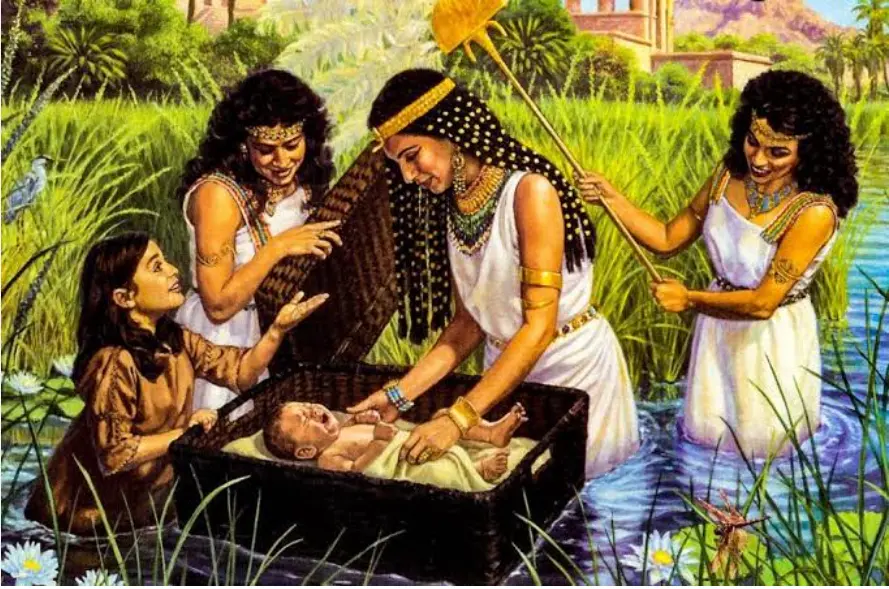
Moses' mother trusted God and courageously hid him for three months. When she could hide him no longer, she placed him in a basket among the reeds of the Nile River. What looked like letting go was actually placing her son into God's hands.
One truth that many people overlook is that long before Moses stood before Pharaoh, God was already preparing his life. He was protected as a baby, raised in Pharaoh's palace, educated in the wisdom of Egypt, and shaped for a purpose he did not yet understand.
Acts 7:22 tells us that Moses “was learned in all the wisdom of the Egyptians, and was mighty in words and deeds.” Even the years that seemed ordinary were part of God's preparation.
Jeremiah 29:11 reminds us that God has plans for His people—plans for peace and hope. Sometimes God prepares us quietly before He uses us publicly.
Relevance to Life and Family
Children may wonder if their lives matter. Parents may wonder whether the sacrifices they make are noticed. The story of Moses reminds us that God sees every child, every parent, and every act of faith.
Even when we cannot see God's plan, He is already preparing the future.
Family Reflection
- How did God protect Moses as a child?
- What does Moses' early life teach us about God's care?
- How can our family trust God with our future, even when we cannot see what lies ahead?
Prayer
Heavenly Father, thank You for knowing our lives from the very beginning. Help our family trust that You are preparing us for the purpose You have planned. Give us faith to place our future in Your hands, knowing that You never lose sight of us. In Jesus' name, Amen.